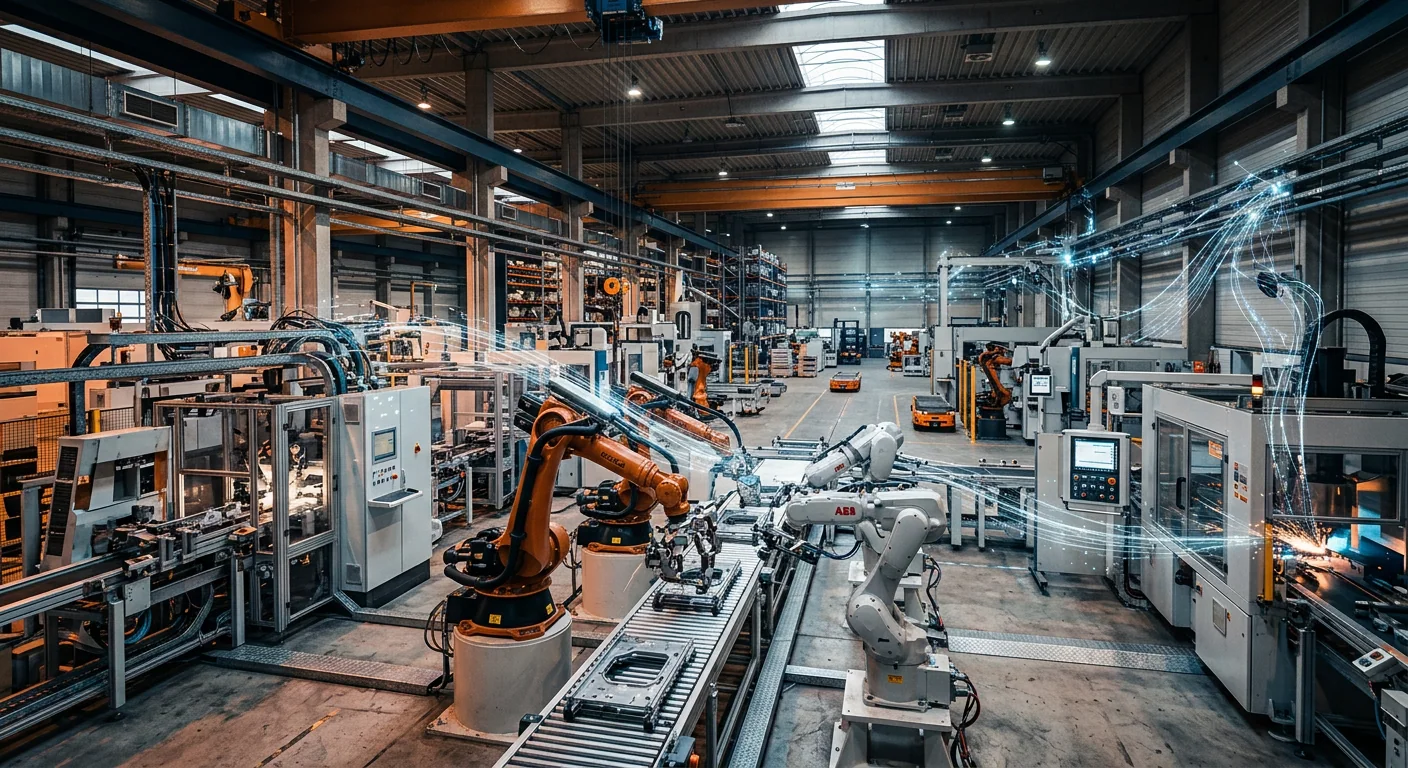
Build IIoT infrastructure. Put machine data to work.
A single software solution instead of multiple siloed systems for data collection, processing, visualization, and production analysis. Save yourself the hassle of integration and interface issues!
When integration takes longer than the use case
For IT/OT teams, what matters is how quickly connected machines deliver useful analysis. These tasks delay the start.
- 01
Too many separate systems to operate
Data collection, databases, and visualization are set up separately. Every interface requires configuration, maintenance, and troubleshooting.
- 02
Repeatedly coding data preparation
Different formats and signal names delay the first analysis. Recurring transformations consume development capacity.
- 03
The first benefit arrives too late
While teams focus solely on building infrastructure, the value of the data for day-to-day production remains unclear.
From machine connection to dashboard
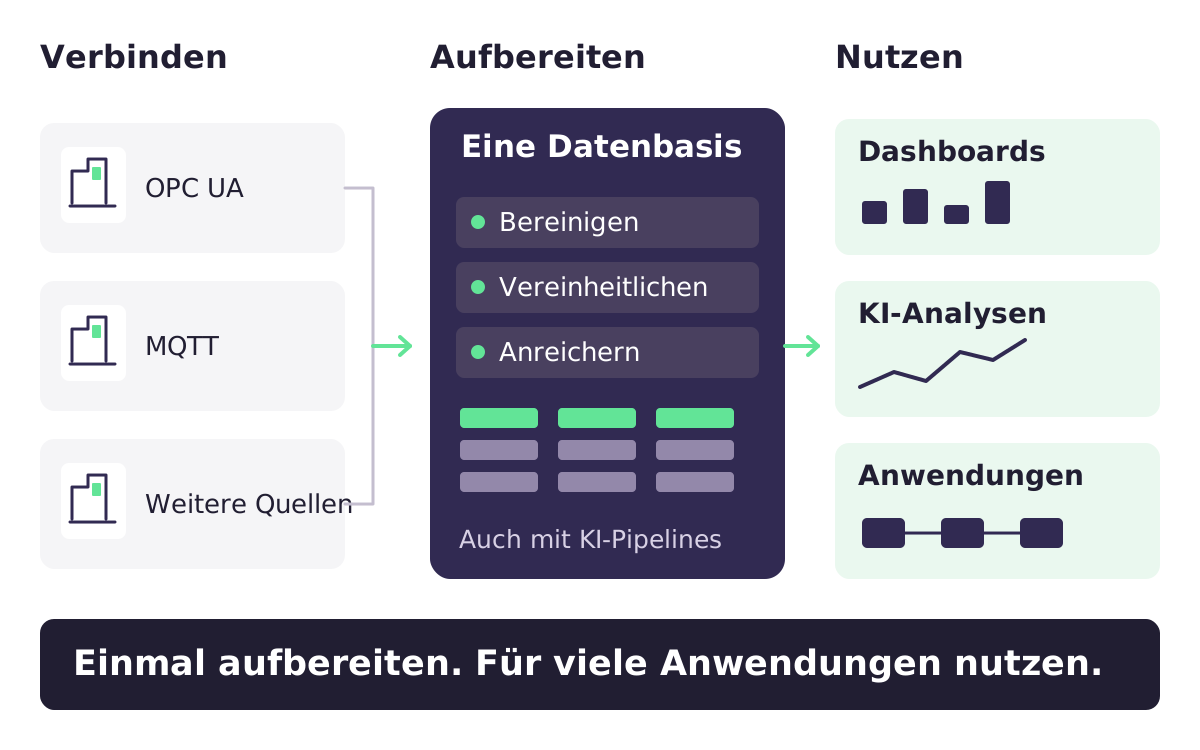
Set up the features you need in a single software solution without any programming. AI pipelines speed up data preparation; dashboards and charts make the results immediately usable.
Which data source would you like to use first?
Connect machines
Connect controllers, sensors, and existing systems via S7, OPC UA, MQTT, or REST. No programming required—just a click of the mouse.
Explore connectivity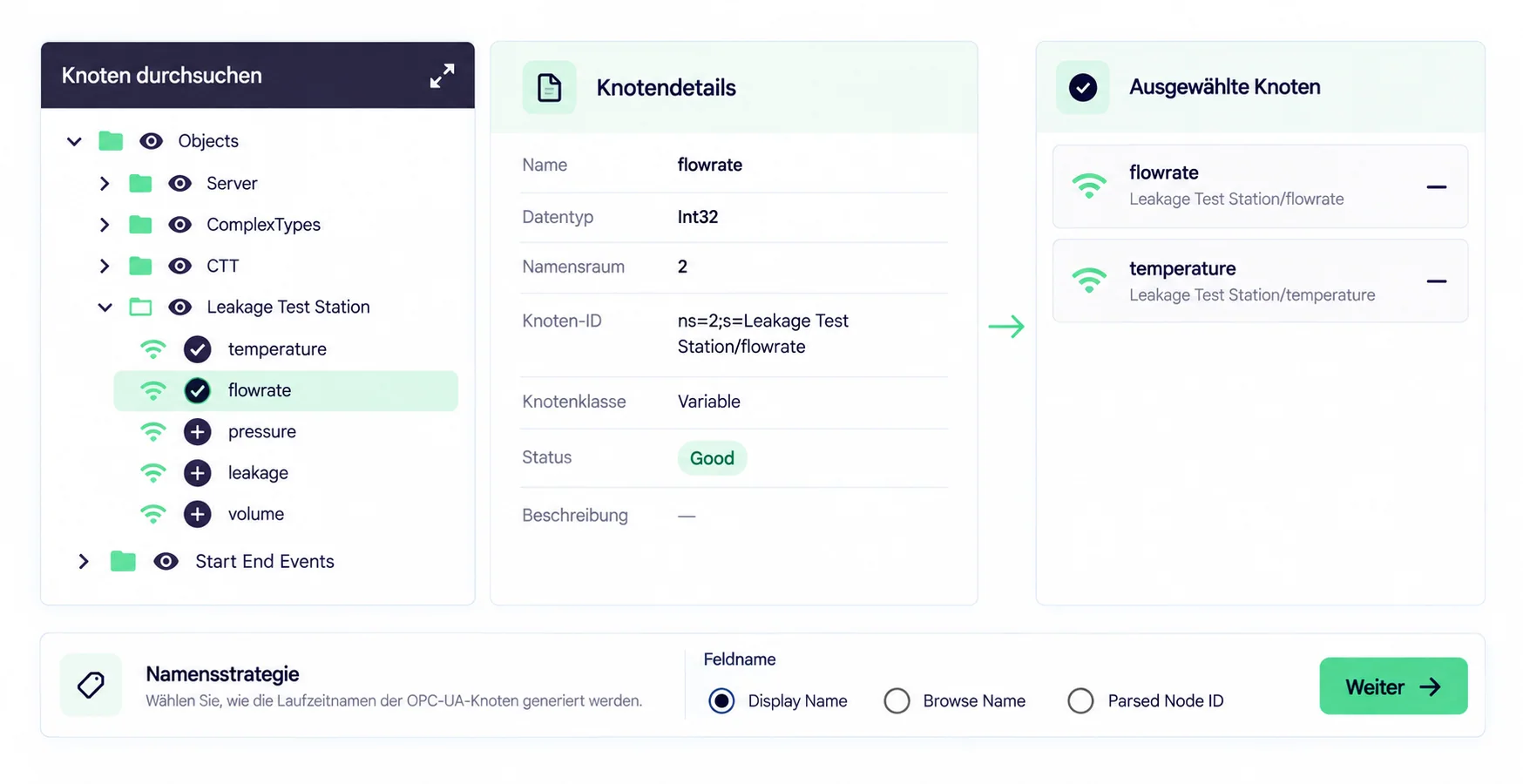
A platform you can extend
The IoT Data Hub is based on Apache StreamPipes, which we initiated. Device connectivity, storage, pipelines, dashboards, and charts are all integrated. AI pipelines and AI notebooks, as well as commercial support, complement the open-source foundation. Using APIs and SDKs, you can integrate existing applications or develop your own extensions.
View IoT Data Hub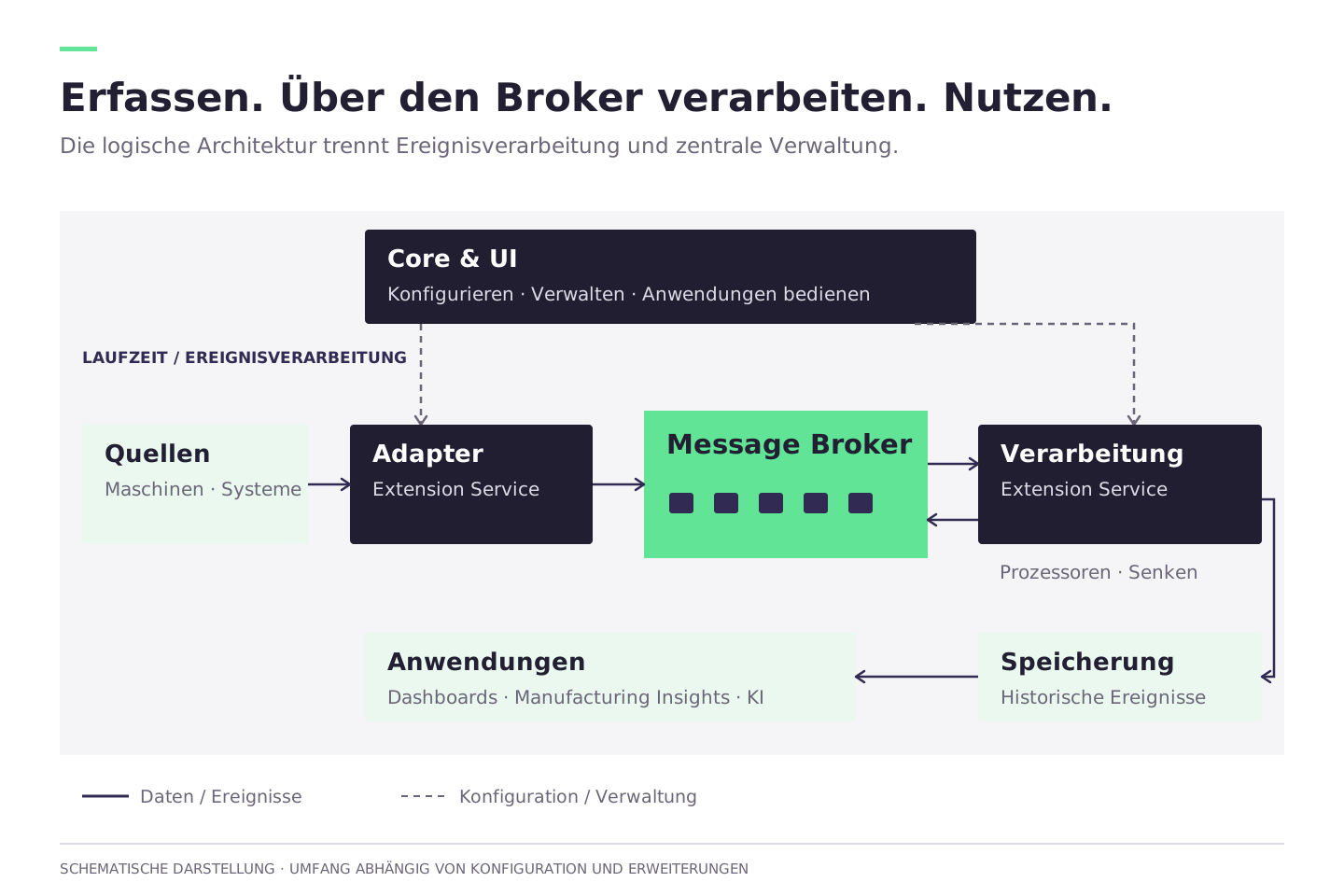
From workshop to a working pilot
Within a few days to weeks, we connect a production line and implement a suitable use case. Scope and data availability determine the timeline.
- 01
Connect the first data sources in a workshop
Together, we select a production line and a specific task. We connect the first data sources during the workshop.
- 02
Set up the production line and platform
We configure data collection, storage, and processing and map signals to machines and processes.
- 03
Implement the use case
We create the appropriate configuration and analysis, such as a dashboard or a custom analysis using AI notebooks.
- 04
Assess the value during the pilot
You will test the solution using production data. We will evaluate the results based on the agreed-upon goals and determine the next steps.
30-minute product demo
How quickly can you put your first machine data to work?
In 30 minutes, we'll show you how to connect data, process it using AI pipelines, and analyze it directly in the dashboard—no preparation required.